Uzbekistan is a young market of 37.2 million people, and most of them are now online. This report collects the latest independent figures on internet use, social media ad reach, connection speeds and e-commerce. It also explains what they mean if you are planning digital marketing in Tashkent and the regions. Every figure below links to its source. Where no reliable source exists, we say so instead of guessing.
Last updated: October 2026
Key figures (October 2025 data)
- Population stands at 37.2 million, with a median age of 27.0. Some 50.8% live in cities and 49.2% in rural areas.
- Internet users number 33.1 million, or 89.0% of the population (+1.9% year on year). About 4.09 million people (11.0%) remain offline.
- Mobile connections total 33.9 million, equal to 91.1% of the population.
- Social media user identities reach 14.1 million, equal to 37.9% of the population and 53.7% of adults aged 18+ (+41.7% year on year).
- Instagram has the largest ad audience, with an advertising reach of 14.1 million. Facebook reaches 2.30 million and TikTok 2.59 million adults.
- Median mobile download speed is 55.51 Mbps (Ookla, August 2025), up 53.4% year on year.
Source: DataReportal, Digital 2026: Uzbekistan (Kepios, Nov 2025).
Use this report as a market-entry checklist. If your brand needs traffic, leads or sales in Uzbekistan, 101digital turns the data into a working plan across Google Ads, social media ads, SEO and marketing consulting.
Almost nine in ten people in Uzbekistan use the internet. The population is young, connections are mainly mobile, and the ad audience on social platforms is growing quickly. Online sales are rising fast but still make up a small share of retail. Your audience is already online, and many sectors still have room for well-built websites, local-language content and properly tracked campaigns.
What Are the Key Internet Usage Statistics in Uzbekistan for 2026?
The latest independent snapshot comes from DataReportal's Digital 2026: Uzbekistan report, published in November 2025 with data mostly from October 2025. It shows a country where almost everyone is online and the number of users is still growing.
| Indicator | Value (late 2025) | Share | Year-on-year change |
|---|---|---|---|
| Total population | 37.2M | 50.8% urban / 49.2% rural | +1.9% |
| Median age | 27.0 years | — | — |
| Internet users | 33.1M | 89.0% of population | +1.9% (+611k) |
| People not using the internet | 4.09M | 11.0% of population | — |
| Cellular mobile connections | 33.9M | 91.1% of population | +0.9% |
| Social media user identities | 14.1M | 37.9% of population · 53.7% of adults 18+ | +41.7% (+4.2M) |
| Median mobile download speed (Ookla, Aug 2025) | 55.51 Mbps | — | +53.4% |
| Median fixed download speed (Ookla, Aug 2025) | 86.71 Mbps | — | +25.0% |
Source: DataReportal, Digital 2026: Uzbekistan (Kepios, Nov 2025). Speed data comes from Ookla, as reported by DataReportal.
Keep two caveats in mind when you read these numbers. First, mobile connections are not the same as people. One person can hold several SIM cards. DataReportal notes that 95.6% of connections are classed as "broadband" capable, but that does not show how many people actually use mobile internet. Second, "social media user identities" may not be unique individuals, because one person can have several accounts.
The practical conclusion is simple. Connections in Uzbekistan are overwhelmingly mobile, and median mobile speeds are now high enough for video and online checkout. Design your websites, landing pages and ad formats for phones first, and make sure they load fast on mobile networks.
How Does Digital Penetration Vary Across Uzbekistan's Cities?
We could not find a current, authoritative source for internet penetration by city, so we do not give city-level percentages. The data does show that the population is split almost evenly between urban (50.8%) and rural (49.2%) areas. A campaign aimed only at Tashkent leaves out a large part of the national audience.
Tashkent remains the main centre for e-commerce, B2B services and ad competition. Cities such as Samarkand, Bukhara, Namangan, Andijan and Fergana each need their own targeting, offers and often their own language mix. Ad platforms let you check audience size by region before you spend. That is a more reliable guide than any published average. When selecting an SEO service provider in Uzbekistan, choose one that plans for regional differences in language, search behaviour and delivery logistics.
Which Social Media Platforms Dominate in Uzbekistan?
The figures below show advertising reach, the number of people a platform says its ads can reach. They are not monthly active users. They are the most consistent cross-platform numbers available, but they come from the platforms' own ad tools and can change with methodology. DataReportal notes that Meta has changed how it reports ad reach, so these figures should not be compared directly with older reports.
| Platform | Advertising reach (late 2025) | Share | Year-on-year change |
|---|---|---|---|
| 14.1M | 37.9% of population · 53.7% of adults 18+ | +41.7% | |
| TikTok | 2.59M (adults 18+) | 10.9% of adults 18+ | +3.2% |
| 2.30M | 6.2% of population | +2.2% | |
| 1.10M (members) | 3.0% of population | +39.2% | |
| Threads | 834k | 2.2% of population | — |
| Messenger | 507k | 1.4% of population | — |
| 262k | 0.7% of population | — | |
| X (Twitter) | 148k | 0.4% of population | −60.3%* |
Source: DataReportal, Digital 2026: Uzbekistan (Kepios, Nov 2025). *DataReportal notes the drop on X may partly reflect account removals. LinkedIn figures are registered members, not ad reach.
Telegram and YouTube are not covered in DataReportal's Uzbekistan report, and we have not found an equally reliable public source for their audience in the country, so we do not quote user numbers for them. That is a gap in the data, not a sign that they are small. Both are part of everyday media use in Uzbekistan, and Telegram plays a central role (see the next section).
So which platform should you prioritise? For paid social, Instagram has by far the largest measurable ad audience. Telegram is usually essential for local communication and community building, and YouTube for video reach. Facebook and LinkedIn are mainly useful for B2B and professional audiences. The right mix depends on your audience and business model, so test it with small budgets before you scale.
Why Is Telegram the Dominant Platform in Uzbekistan?
In Uzbekistan, Telegram is much more than a messaging app. It works as a news feed, a sales channel, a customer service desk and an ad medium at the same time. We do not quote a user count, because no reliable public source measures Telegram's audience in Uzbekistan. Its role in daily life is easy to see, though:
- Official communication runs through Telegram. State agencies, ministries and municipalities have official channels there, which gives the platform institutional weight
- News and media outlets in Uzbekistan publish on Telegram alongside their websites
- Commerce happens in channels, groups, bots and Telegram Mini Apps, where customers browse and order without leaving the app
- Payments through local services such as Click and Payme can be connected to Telegram bots, so the order and the payment happen in one place
- Light data use keeps text-first channels usable on slower or capped mobile connections
For most businesses, this means a digital presence in Uzbekistan should include Telegram. Entering the market without a Telegram marketing strategy means missing a channel your customers already use every day. There are no independent audience totals, so judge Telegram channels and ad placements by measurable results such as views, clicks and leads, not by claimed subscriber counts.
How Large Is Uzbekistan's E-Commerce Market in 2026?
According to the National Agency for Perspective Projects (NAPP), goods sold through e-commerce in Uzbekistan reached 22.7 trillion soums in 2025, roughly 1.5 times the previous year. Online trade's share of total retail rose from 3.7% in 2024 to 4.6% in 2025.
Source: UzDaily, "Online Sales in Uzbekistan Reach 22.7 Trillion Soums in 2025", citing NAPP (21 February 2026). The Statistics Agency also publishes an annual e-commerce turnover series on its SIAT data portal. Figures from different agencies may not match exactly because their methods differ.
Online sales are growing quickly from a low base. More than 95% of retail still happens offline, so there is plenty of room to grow. We have not found an authoritative breakdown by product category, so we do not publish one.
The market is shaped by local players. Uzum Market is the best-known domestic marketplace, OLX.uz is widely used for classifieds, and food and grocery delivery services are active in Tashkent and other large cities. On the payment side, Click, Payme and Uzum Bank are everyday payment methods for local shoppers. If you sell online, you need these local payment options, not only international cards.
What Do Digital Advertising Costs Look Like by Sector and Platform?
There is no independent, published benchmark for advertising costs in Uzbekistan that we can verify, so this edition no longer includes CPC tables or budget ranges. Actual costs depend on the auction. Your sector, target language (Uzbek or Russian), region, season and the quality of your ads and landing pages all move the price.
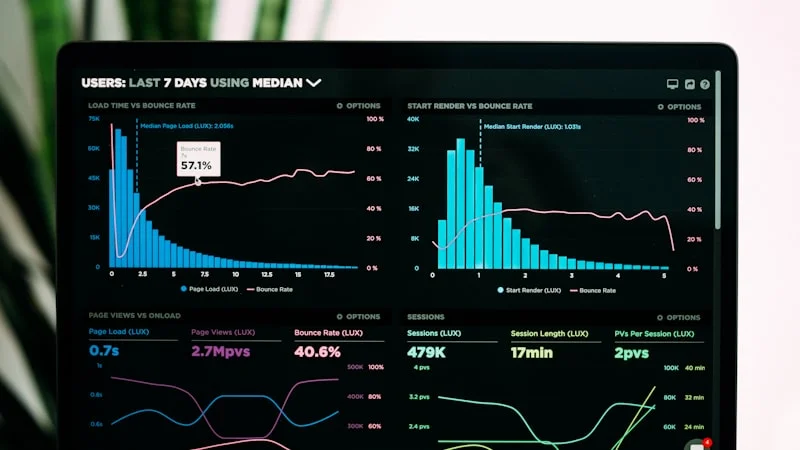
How do you get a realistic number for your own business? Use Google Keyword Planner to see bid estimates for your exact keywords in Uzbekistan, and use Meta's and TikTok's ad tools to estimate reach for your audience before launching. Then run a short, tracked test campaign. A week or two of real data with conversion tracking is worth more than any market average. As a rule, sectors with high-value sales, such as real estate, finance, automotive and private healthcare, compete harder for search clicks than restaurants or local retail. Our Google Ads Uzbekistan guide explains campaign setup and how to read these estimates.
Which Sectors Are Most Digitally Mature in Uzbekistan?
We have not found an authoritative survey that measures digital maturity or website ownership by sector in Uzbekistan, so we no longer publish percentages here. From what is visible in the market, banking, telecoms and large retail chains run the most developed digital operations, with apps, online payments and active social media. Many businesses in construction, agriculture, manufacturing and industrial B2B still have a basic or limited online presence.
Where competitors have a weak online presence, a business that builds a solid website, publishes useful content in Uzbek and Russian and tracks its leads properly can stand out faster. You can check this for your own niche. Search your main service keywords in Uzbek and Russian and see how many results are recent, detailed and relevant. Understanding how SEO works is the first step toward using such gaps.
What Is the Foreign Investment Landscape in Uzbekistan's Digital Market?
Companies from Turkey, China, Russia, South Korea, Europe and elsewhere already operate in Uzbekistan across construction, textiles, energy, retail, education and services. We have removed the earlier country-by-country company and investment figures because we could not trace them to a verifiable primary source.
For marketing, the key point is that foreign-owned businesses often still rely on personal networks and referrals instead of structured, data-driven digital marketing. If you set up local-language search, social and analytics from the start, you can build a clear advantage. Our Uzbekistan Market Entry Guide 2026 covers the regulatory, cultural and strategic sides of market entry in more detail.
Which Digital Marketing Channels Deliver the Highest ROI in Uzbekistan?
Return on investment depends on the business, so we no longer publish ROI ranges. Instead, here is how the main channels compare in what they are good at:
| Channel | Speed of first results | Main strength | Best suited for |
|---|---|---|---|
| SEO (organic) | Slow — builds over months | Traffic keeps coming without paying per click | Long-term, sustainable growth |
| Google Ads | Fast — days | Captures people already searching for your service | Lead generation, high-intent demand |
| Instagram / Facebook Ads | Fast | Largest measurable social ad audience in the country | B2C, fashion, beauty, local services |
| Telegram advertising | Fast | Reaches audiences where they read news and shop | Local audiences, community building |
| TikTok Ads | Fast | Short video, younger audiences | Brand awareness, consumer products |
| Content marketing | Slow — builds over months | Trust and visibility in search and AI answers | Authority building, complex or B2B services |
Paid channels bring results quickly but stop when the budget stops. SEO and content take longer but keep working. Most businesses do best with a mix of paid search or social for immediate leads and SEO and content in Uzbek and Russian for lasting visibility. Our targeted advertising strategies article compares the platforms in more detail.
What Are the Key Digital Marketing Trends Shaping Uzbekistan in 2026?
The trends below are qualitative observations of the market, not measured statistics. Take them into account when you plan your entry into Uzbekistan.
1. Telegram Mini Apps: The Website Alternative
Brands are increasingly building Mini Apps inside Telegram as an alternative or addition to a traditional website. Customers can browse products, place orders and pay with local services such as Click or Payme without leaving Telegram. This suits small and medium-sized businesses that want to sell where their customers already spend time.
2. Growth in Uzbek-Language Content
For years, much of the useful online content for Uzbekistan was in Russian. More and more blogs, videos and podcasts are now published in Uzbek, but in many niches the supply of detailed, up-to-date Uzbek content is still limited. Brands that invest in an Uzbek-language SEO strategy can still gain an early advantage.
3. Video-First Content Strategy
Short video on Instagram Reels, YouTube Shorts and TikTok drives a large part of organic reach. For international businesses, this means producing video in local languages, not just adding subtitles to English content.
4. Local Payment Integration Is Non-Negotiable
Click, Payme and Uzum Bank are part of everyday shopping. A website that accepts only international cards will lose many local customers. Plan local payment integration as part of market entry, not as an afterthought.
5. AI-Powered Marketing Adoption
Marketing teams in Uzbekistan use AI tools for multilingual content drafts, ad optimisation and chatbots. This helps in a market where content often has to be produced in Uzbek, Russian and English. Native-speaker editing is still needed to keep quality and tone right in each language.
6. Voice Search Optimization (Uzbek Language)
As people increasingly speak their searches into their phones instead of typing them, queries are becoming longer and more conversational. It makes sense to include natural, question-style phrases in Uzbek and Russian in your SEO alongside short keywords. Content that answers real questions clearly is also more likely to be used in AI-generated answers.

What Competitive Gaps Exist in Uzbekistan's Digital Market?
In many commercial niches in Uzbekistan, search results in Uzbek, and sometimes in Russian, still show outdated pages, thin listings or no detailed answer at all. We have removed the earlier keyword volume table because we could not reproduce those figures from a verifiable source.
You can check the gap for your own business in a few minutes. Search your core service terms in Uzbek and Russian, note how many first-page results are recent, detailed and relevant, and check Google Keyword Planner for search demand in Uzbekistan. Where demand exists but quality content is scarce, a well-structured, genuinely useful page can rank much faster than in mature markets. How fast depends on the niche, your site's authority and the quality of the content. It helps to choose a partner that can measure and act on these gaps. Our agency selection guide provides a framework for evaluating agencies.
How Much Should International Businesses Invest in Uzbekistan's Digital Marketing?
Advertising budgets depend on your sector, goals and competition, so we do not publish generic budget ranges. What we can give you are our own published starting prices for the work itself:
| Service | Starting price | Billing |
|---|---|---|
| SEO | from $350 | per month |
| Google Ads management | from $400 | per month |
| Social media management (SMM) | from $500 | per month |
| Performance marketing | from $500 | per month |
| Landing page | from $300 | per project |
| Website development | from $800 | per project |
| CRM setup | from $500 | per project |
Source: 101digital starting prices (October 2026). Final prices depend on scope. The advertising budget paid to Google, Meta, TikTok or Telegram is set separately according to your goals.
A practical approach is to start with a small, fully tracked test budget, measure cost per lead in your own niche, and then scale the channels that work. SEO and content usually show their first meaningful results more slowly than paid ads, so plan them as a longer-term investment that runs alongside paid campaigns.
According to DataReportal's Digital 2026: Uzbekistan report (Kepios, November 2025), the country had 33.1 million internet users in October 2025 — 89.0% of the population, up 1.9% year on year. Social media user identities rose by 41.7% to 14.1 million. On the commerce side, the National Agency for Perspective Projects reported that e-commerce sales reached 22.7 trillion soums in 2025, about 1.5 times the previous year, with online trade at 4.6% of retail.
By measurable advertising reach, Instagram is the largest platform in Uzbekistan, with 14.1 million people reachable by ads in late 2025, according to DataReportal. TikTok reaches 2.59 million adults and Facebook 2.30 million. These are ad-reach figures, not active users. DataReportal does not cover Telegram or YouTube for Uzbekistan, but Telegram is widely used for news, official communication, commerce and customer service, so it belongs in almost every local digital strategy.
The National Agency for Perspective Projects reported that goods sold through e-commerce in Uzbekistan reached 22.7 trillion soums in 2025, about 1.5 times the 2024 level. Online trade made up 4.6% of total retail, up from 3.7% a year earlier. Uzum Market is the best-known domestic marketplace, and local payment methods such as Click, Payme and Uzum Bank are essential for any online store.
There is no verified public benchmark for advertising costs in Uzbekistan. Costs depend on your sector, target language, region and ad quality. The most reliable way to estimate them is to check Google Keyword Planner and the Meta and TikTok ad tools for your audience, then run a short, tracked test campaign. For agency work, 101digital's starting prices (October 2026) are from $400/month for Google Ads management, $350/month for SEO and $500/month for social media management. The ad budget itself is set separately.
According to DataReportal's Digital 2026: Uzbekistan report, 33.1 million people in Uzbekistan used the internet in October 2025, a penetration rate of 89.0%. About 4.09 million people (11.0%) were still offline. There were 33.9 million cellular mobile connections, equal to 91.1% of the population, and the median mobile download speed was 55.51 Mbps (Ookla, August 2025). Mobile-first design is essential.
Here is a practical roadmap. 1) Set up a Telegram channel with Uzbek-language content, 2) build a mobile-first website in Uzbek and Russian, 3) launch an Instagram account with content in Uzbek and Russian, 4) create a Google Business Profile with your Tashkent address, 5) start tracked Google Ads campaigns for Uzbek and Russian keywords. English-only or home-language-only content is not enough. Plan for Uzbek (Latin script) and Russian from the start.
It depends on the business, and we do not publish average ROI figures. Google Ads and paid social deliver the fastest results because they reach people immediately. SEO and content marketing take longer but keep bringing traffic without paying for each click, and they work well in Uzbekistan because detailed Uzbek-language content is still limited in many niches. Most businesses do best with a tracked mix of paid ads for immediate leads and SEO for long-term visibility.
Yes. 101digital provides remote digital marketing services from its Tashkent headquarters to all regions of Uzbekistan — including Samarkand, Bukhara, Namangan, Andijan, Fergana, and Qarshi. Our SEO, Google Ads, Instagram management, and Telegram marketing services are fully operational regardless of the client's location within Uzbekistan. For international businesses, we also support market entry from abroad with multilingual campaign management across all five languages.
In many niches, SEO competition in Uzbekistan is lower than in mature markets such as the UK, the US or Turkey, especially for Uzbek-language searches, where detailed and up-to-date content is still limited. How fast you can reach the first page depends on the niche, your site's authority and the quality of your content. The best way to judge it is to search your main keywords in Uzbek and Russian and assess the quality of the current results.
Yes. Uzbekistan's digital policy is set out in the "Digital Uzbekistan – 2030" strategy (Presidential Decree UP-6079 of 5 October 2020). IT companies can apply for IT Park residency. IT Park's own guide (December 2023) lists exemption from corporate taxes, a 7.5% personal income tax rate for employees, no social tax and VAT exemption on imported services for residents. Terms can change, so check the current conditions with IT Park or a tax adviser before relying on them.
Conclusion: Where Is Uzbekistan's Digital Market Heading in 2026 and Beyond?
Uzbekistan's digital market rests on a large, young and mostly online population. DataReportal counts 33.1 million internet users, 89.0% penetration, a median age of 27.0 and fast-growing social media ad audiences. Online retail is growing quickly from a small base, at 4.6% of retail in 2025 according to NAPP.
For international businesses entering from Turkey, China, Russia, South Korea, the European Union or the United States, the conclusion is practical, not dramatic. The audience is already online, but in many sectors the competition for well-made, local-language digital content and properly tracked campaigns is still developing. Businesses that build their presence now, in Uzbek and Russian and on the platforms people actually use, will be better positioned as the market matures.
In this market, base your decisions on real data from your own campaigns, not on averages. At 101digital, we work in five languages (Uzbek, Turkish, Russian, English and Chinese) and help international brands set up measurable digital marketing in Uzbekistan. Contact us for a complimentary digital strategy consultation to discuss how your business can build a strong digital presence in Uzbekistan.
Sources
- DataReportal, Digital 2026: Uzbekistan — Simon Kemp / Kepios, published 8 November 2025 (data mostly October 2025, speed data from Ookla, August 2025).
- UzDaily, "Online Sales in Uzbekistan Reach 22.7 Trillion Soums in 2025" — 21 February 2026, citing the National Agency for Perspective Projects (NAPP).
- Statistics Agency of Uzbekistan, SIAT portal — E-commerce trade volume (annual).
- Presidential Decree UP-6079 of 5 October 2020, "On approval of the Strategy 'Digital Uzbekistan-2030'" — lex.uz.
- IT Park Uzbekistan, "Useful Guide: What support programs does IT Park provide?" — 21 December 2023.
- 101digital starting prices (October 2026) — 101digital.uz.
Want this set up for your business?
101digital builds advertising, websites and CRM systems for businesses in Uzbekistan — strategy, campaigns, tracking and reporting in one place.
Related services:
SEO ServiceGoogle Ads Management
Get a free audit →